You want a convenient, safe way to charge your EV charger at home or workplace, and finding a qualified local installer makes that possible. Search for certified installers who match your property type and budget, then compare quotes, timelines, and workmanship guarantees to pick the best fit.
This article Ev Charger Installers Near Me walks you through how to locate reliable EV charger installers near you, what to expect during installation, and the typical costs involved so you can make a confident decision. Stay with this guide to save time, avoid common pitfalls, and get your charger installed correctly the first time.
Finding Reliable EV Charger Installers Near Me
You want a safe, code-compliant installation that fits your vehicle, home electrical capacity, and budget. The following subsections explain which installer qualities matter, how to confirm credentials, and why hiring a local pro often makes the process faster and simpler.
Factors to Consider When Choosing an Installer
Look for installers who specify experience with the charger brand you plan to buy (Tesla, ChargePoint, JuiceBox, etc.). Ask how many identical installs they’ve completed and whether they handle both the charger and any required panel upgrades.
Request a written quote that lists labor, parts, permit pulls, and any potential extra costs like trenching or conduit. Compare at least three bids to spot unusually low or high pricing.
Evaluate response time and scheduling flexibility. Confirm whether they provide a site visit before final pricing. Check for warranties on labor and whether they’ll register the installation with the charger manufacturer for warranty validity.
How to Verify Installer Credentials
Verify the electrician’s state or local license number on your jurisdiction’s licensing website. Confirm liability and workers’ compensation insurance by requesting current certificates; don’t accept verbal claims alone.
Look for certifications such as EVITP, NAXJA, or manufacturer-specific installer training; these show hands-on EV charging education. Ask for references from recent home Level 2 installs and check photos of completed work to confirm neat conduit runs and proper mounting.
Check permit records with your local building department to ensure they pull inspections. Use online reviews (Google, Checkatrade, HomeAdvisor) but weigh recent, detailed reports more heavily than star ratings. Keep copies of all documents and receipts for future warranty or resale needs.
Benefits of Local EV Charger Installation
A local installer understands municipal permitting, inspection timelines, and common utility requirements in your area. That typically shortens approval and inspection windows, so you get operational charging sooner.
Local electricians can offer faster service calls for troubleshooting and are more likely to honor labor warranties because they depend on neighborhood reputation. They also often maintain relationships with nearby suppliers, which can reduce lead times for parts and reduce overall project delays.
Choosing a nearby installer can reduce travel charges and allow same-day site assessments in many cases. This practical advantage helps produce a more accurate quote and avoids surprise costs during installation.
Installation Process and Cost Overview
You’ll learn which service fits your home, what a typical price range looks like in your area, and how long each step usually takes. Expect variations based on panel capacity, distance from meter to parking, and permit requirements.
Types of EV Charger Installation Services
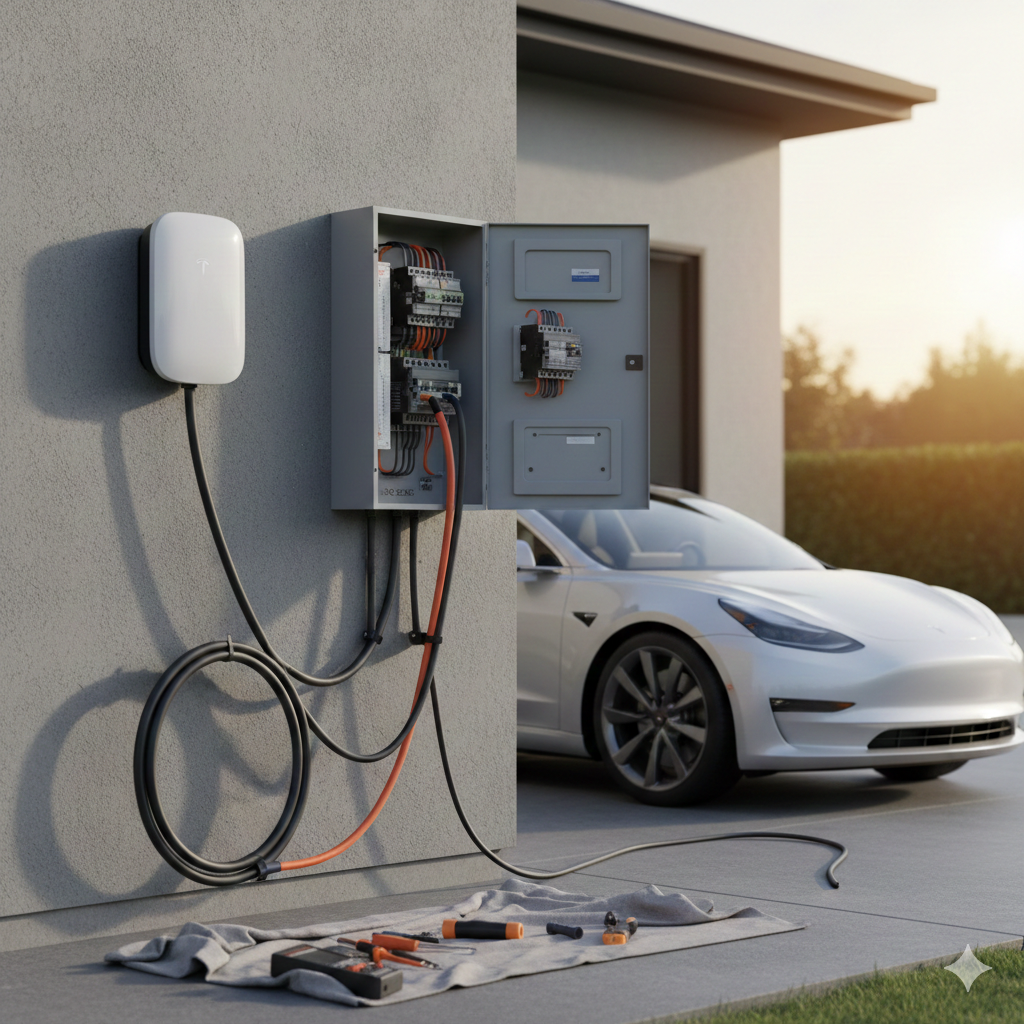
Residential installations fall into three common types: basic plug-in Level 1, hardwired Level 2, and upgraded electrical service with dedicated circuit or panel work. Level 1 uses a standard 120V outlet and usually needs no electrician beyond a safety check. Level 2 (240V) provides faster charging and typically requires a certified electrician to install a dedicated circuit and properly mount the charger.
Some jobs require a panel upgrade or a new subpanel when your main panel lacks capacity. Commercial or multi-unit installations add network setup, load management, and ADA or permitting complexities. Ask installers whether they are licensed, insured, and experienced with local codes; request a written scope that lists wiring, conduit, permit pulls, and testing.
Average Costs in My Area
Typical residential installation costs usually range from about $800 to $2,500 for a straightforward Level 2 setup at a single-family home. Lower-end jobs (around $800–$1,000) involve short runs from an existing 240V circuit or minor conduit work. Mid-range jobs ($1,000–$1,800) include installing a new dedicated circuit, mounting, and a permit.
Higher-cost scenarios ($1,800–$5,000+) cover panel upgrades, long trenching or conduit runs, or installations far from your electrical service. Commercial or multi-unit installations commonly exceed this range due to networking, multiple units, and load-management gear. Get at least three written estimates and compare included items: permits, inspection fees, materials, labor hours, and warranty on workmanship.
Timeline for EV Charger Installation
A simple Level 2 install—when a 240V circuit exists—often completes in 2–4 hours on site. If the electrician must run a new circuit or add conduit within a garage or driveway, expect a half-day to a full day of labor. Permitting and inspection add time: typical municipal permit turnaround runs from 3 days to 3 weeks depending on locality.
If the job requires a panel upgrade, trenching, or coordination with the utility for a service upgrade, plan for 1–4 weeks from estimate acceptance to final approval. Commercial projects with network configuration, multiple stalls, or utility upgrades can take several weeks to months. Schedule work when you can be onsite for the electrician’s arrival and final inspection to avoid delays.